Ondo Studio
Four plants, four seasons네 가지 식물, 네 개의 계절
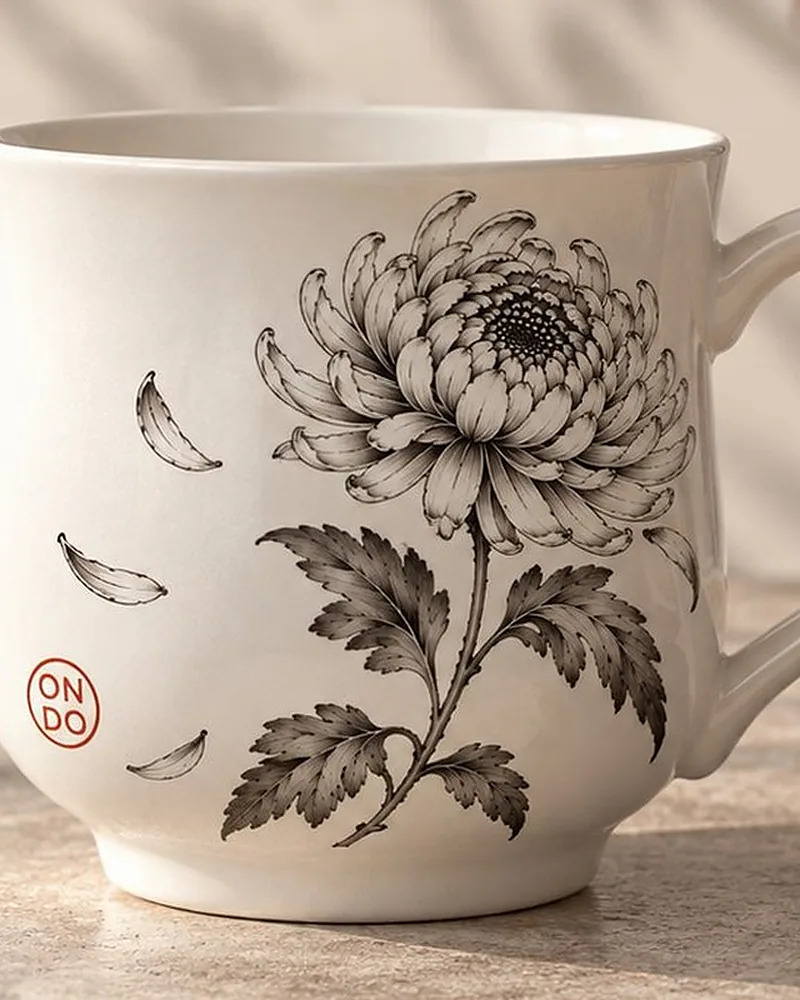
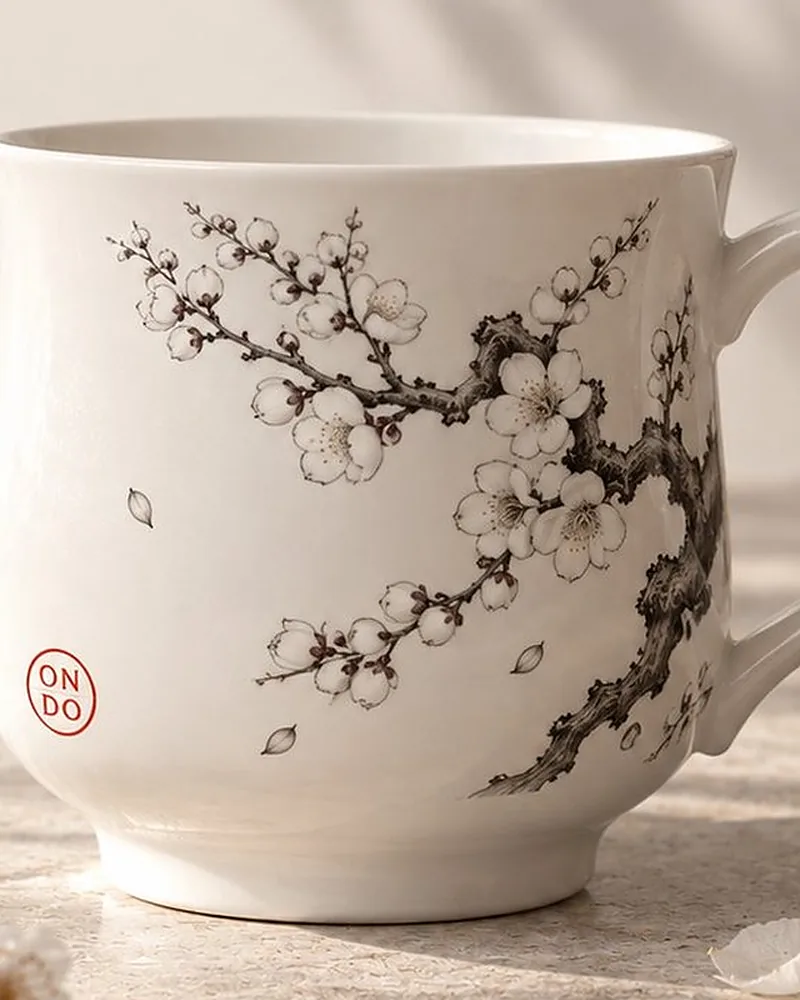
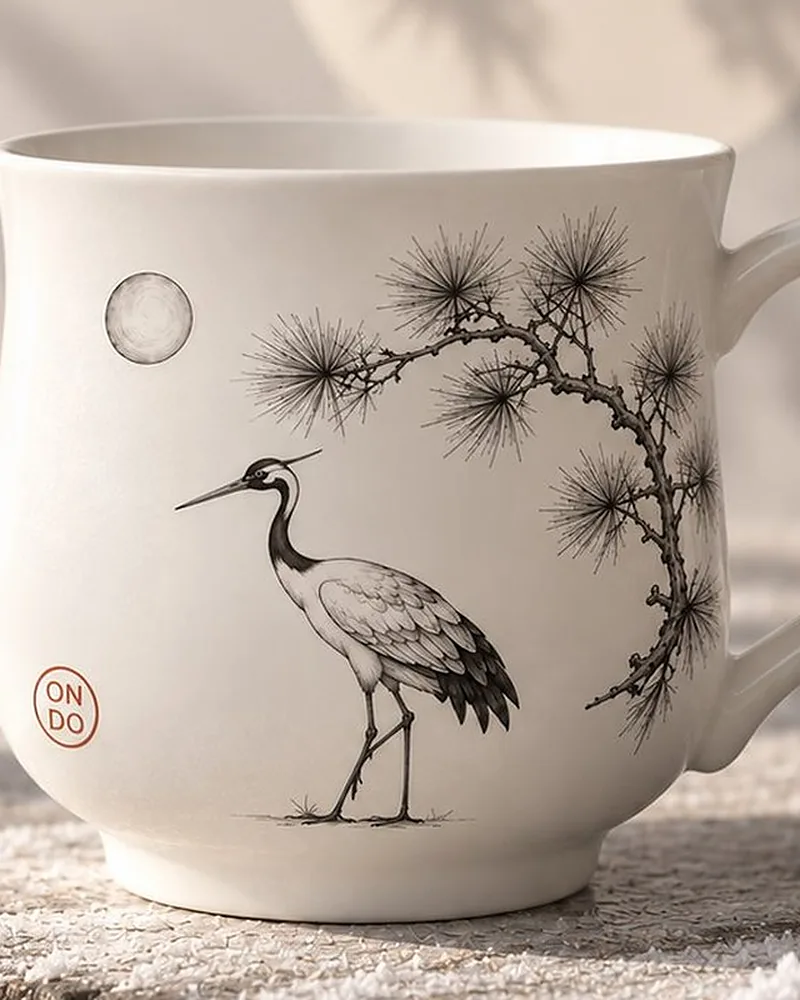
The Hwa Collection (화, 華) draws one plant for each season, in black ink and nothing else.
Plum blossom, spring. The plum flowers while the last cold of winter is still in the air, so it has long stood for endurance and for the first sign of spring.
Iris, summer. Irises open in early summer. Their upright, narrow leaves give the summer cup its clean vertical line.
Chrysanthemum, autumn. Late in the year, when most flowers are done, the chrysanthemum is still in bloom. It is the flower most closely tied to autumn in Korea.
Pine and crane, winter. Pine stays green in the cold and the crane is a traditional emblem of long life. Together they are the stillest of the four.
Each season also has a short phrase: the start of spring, deep and clear, warm and peaceful, quiet and still. They are printed nowhere on the cups; they are there to name the mood we drew toward.
화(華) 컬렉션은 계절마다 한 가지 식물을, 오직 검은 먹선으로만 그렸습니다.
봄, 매화. 매화는 겨울의 마지막 추위가 남아 있을 때 꽃을 피워, 예로부터 인내와 봄의 첫 소식을 뜻해 왔습니다.
여름, 붓꽃. 붓꽃은 초여름에 핍니다. 곧게 선 가는 잎이 여름 컵에 맑은 세로선을 만들어 줍니다.
가을, 국화. 대부분의 꽃이 진 늦은 계절에도 국화는 피어 있습니다. 한국에서 가을과 가장 가깝게 이어진 꽃입니다.
겨울, 소나무와 학. 소나무는 추위 속에서도 푸르고, 학은 예로부터 장수를 상징합니다. 둘이 함께 네 컵 가운데 가장 고요한 장면을 이룹니다.
계절마다 짧은 문장도 하나씩 붙였습니다. 봄의 시작, 깊고 맑게, 따뜻하고 평온하게, 고요하고 차분하게. 컵에 새겨져 있지는 않지만, 그림이 향한 분위기를 가리키는 말입니다.